Every tennis player eventually notices it. You switch from your regular court to a different surface and suddenly nothing feels right. The ball bounces higher, or skids lower. Your footwork timing is off by a fraction of a second. Shots that normally land deep are flying long, or dying short.
That's not your game falling apart. That's the surface talking.
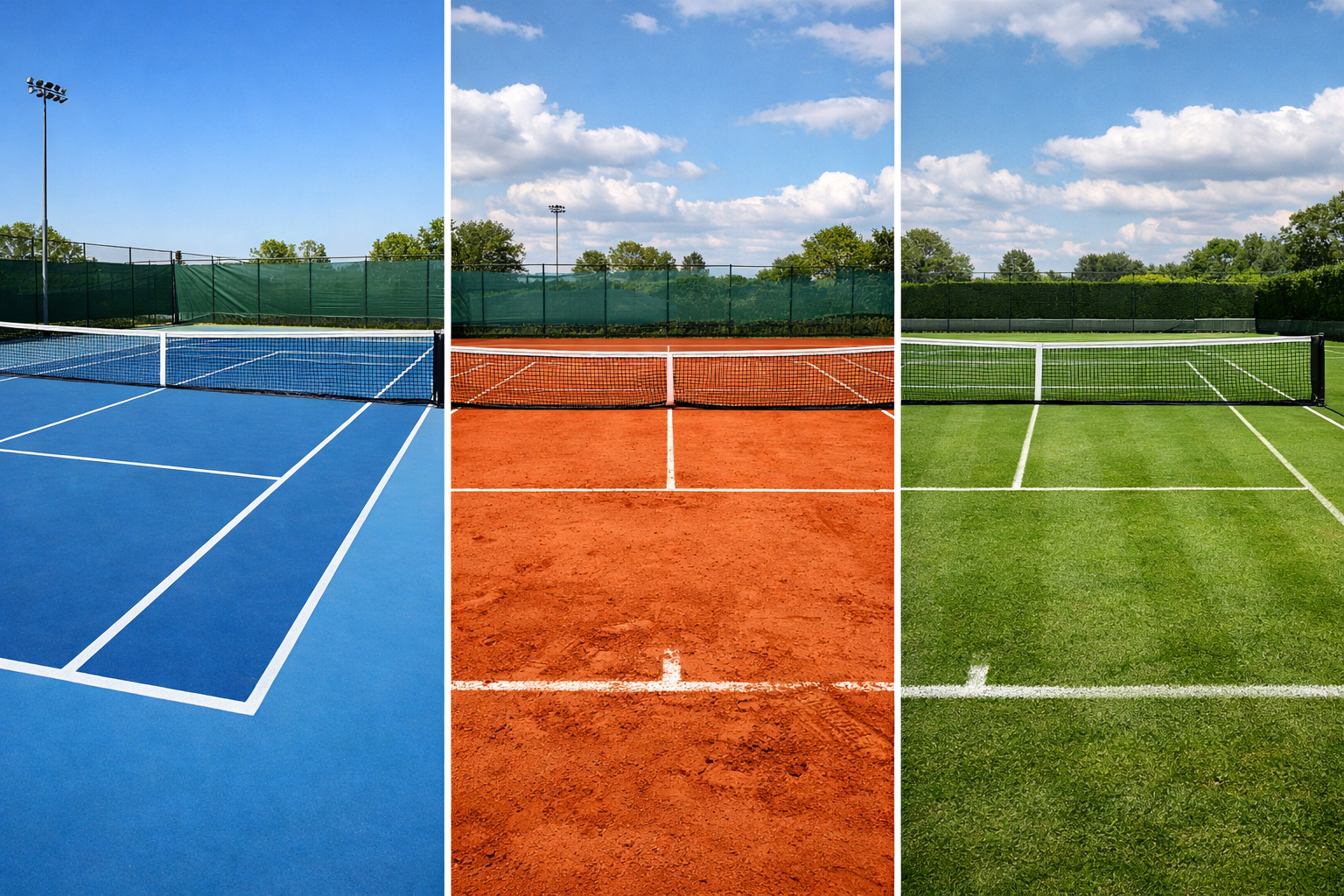
Tennis is one of the only major sports where the playing surface fundamentally changes how the game works. A basketball court is a basketball court. A soccer pitch is a soccer pitch. But a clay court and a grass court might as well be different sports. The ball behaves differently, movement patterns change, and entire playing styles that dominate on one surface can fall apart on another.
Here's how each surface works, what it does to the ball, and why it matters for your game.
Hard Courts: The Default
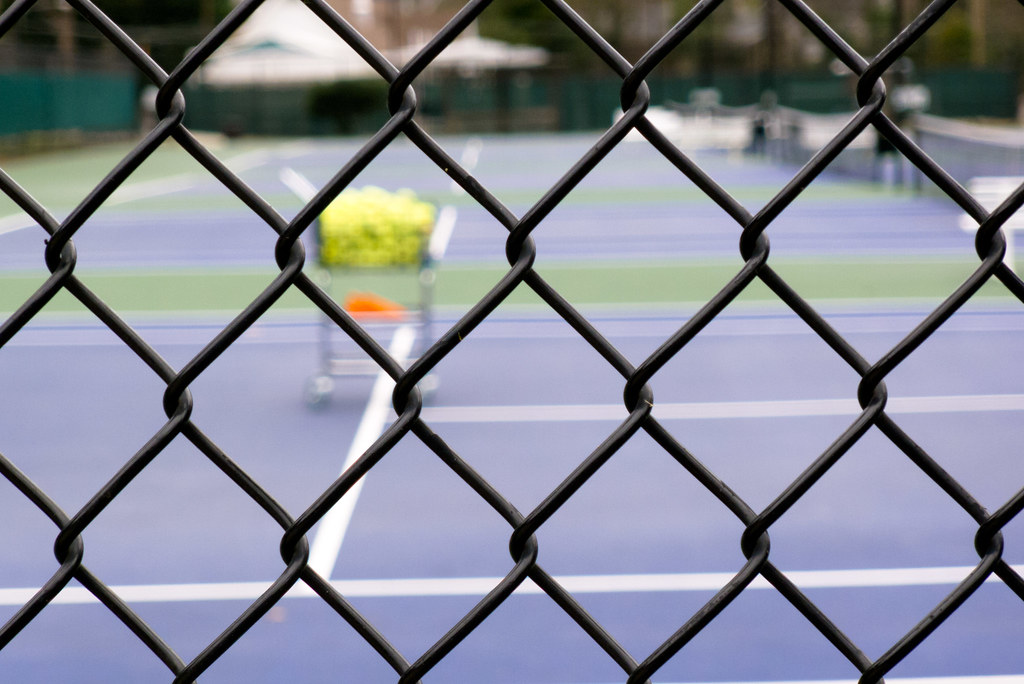
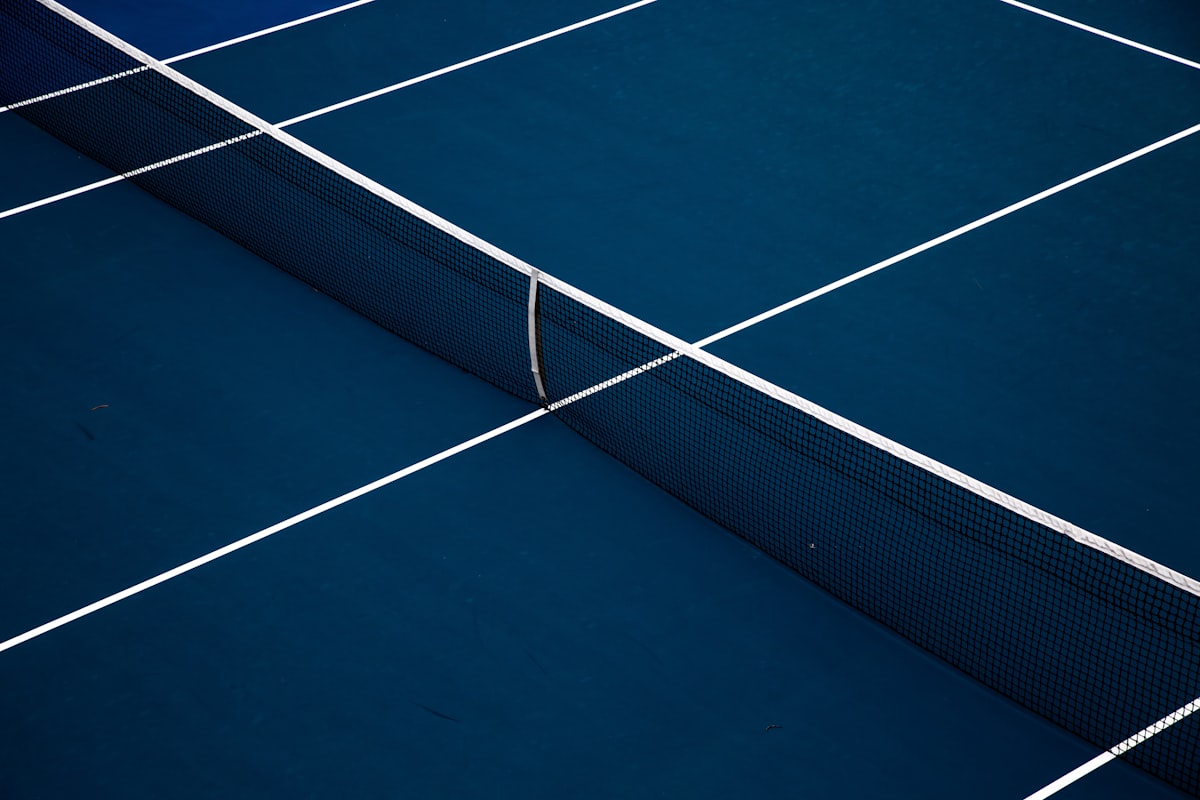 Photo by Alex Viau
If you've played tennis in the United States, you've almost certainly played on a hard court. They account for the vast majority of public courts in the country and host roughly 60% of all professional tour events. Both the US Open and Australian Open are played on hard courts.
How they're built
A hard court starts with a rigid base of asphalt or concrete, then gets topped with layers of acrylic coating. That coating determines the court's color, texture, and speed. The US Open uses Laykold acrylic. The Australian Open uses GreenSet. The specific blend of sand mixed into the acrylic finish is what controls how fast or slow the ball plays.
How they play
Hard courts produce the most consistent, predictable bounce of any surface. The ball comes off the ground at a true, medium-high angle with medium-to-fast speed. There are no surprises. What you see is what you get.
This makes hard courts the most neutral surface in tennis. They don't dramatically favor any single playing style. Baseline grinders can rally. Big servers can dominate with pace. All-court players can mix things up. The court doesn't push you toward one strategy.
The ITF Court Pace Classification rates surfaces from 1 (slow) to 5 (fast). Hard courts typically land in the 3 to 4 range, depending on the acrylic texture. More sand in the coating means more friction, which slows the ball down.
The trade-off: your body pays for it
Hard courts have the highest injury rate of any surface. The rigid, unforgiving base transmits every impact directly through your feet, ankles, knees, and lower back. There's no give. No slide. Every stop is abrupt.
Common hard court injuries include knee sprains, plantar fasciitis, shin splints, and lower back pain. If you play frequently on hard courts, investing in quality shoes with good cushioning isn't optional. It's structural maintenance for your body.
Maintenance
This is where hard courts win. They're the lowest-maintenance surface by a wide margin. Sweep weekly, pressure wash periodically, and resurface every 4 to 8 years at a cost of $4,000 to $10,800. Annual maintenance runs $500 to $2,000. That's why they're everywhere.
Clay Courts: The Slow Game
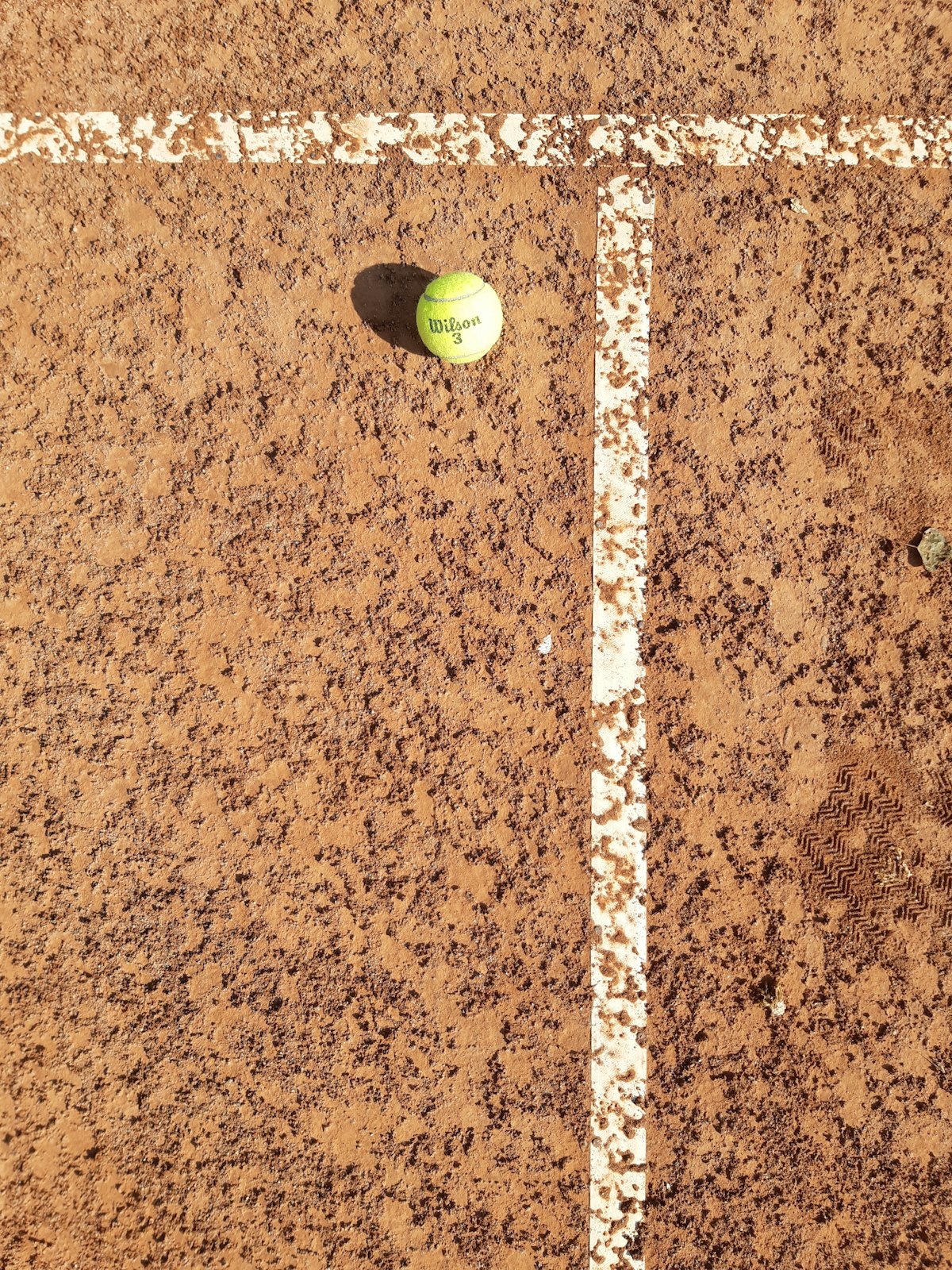
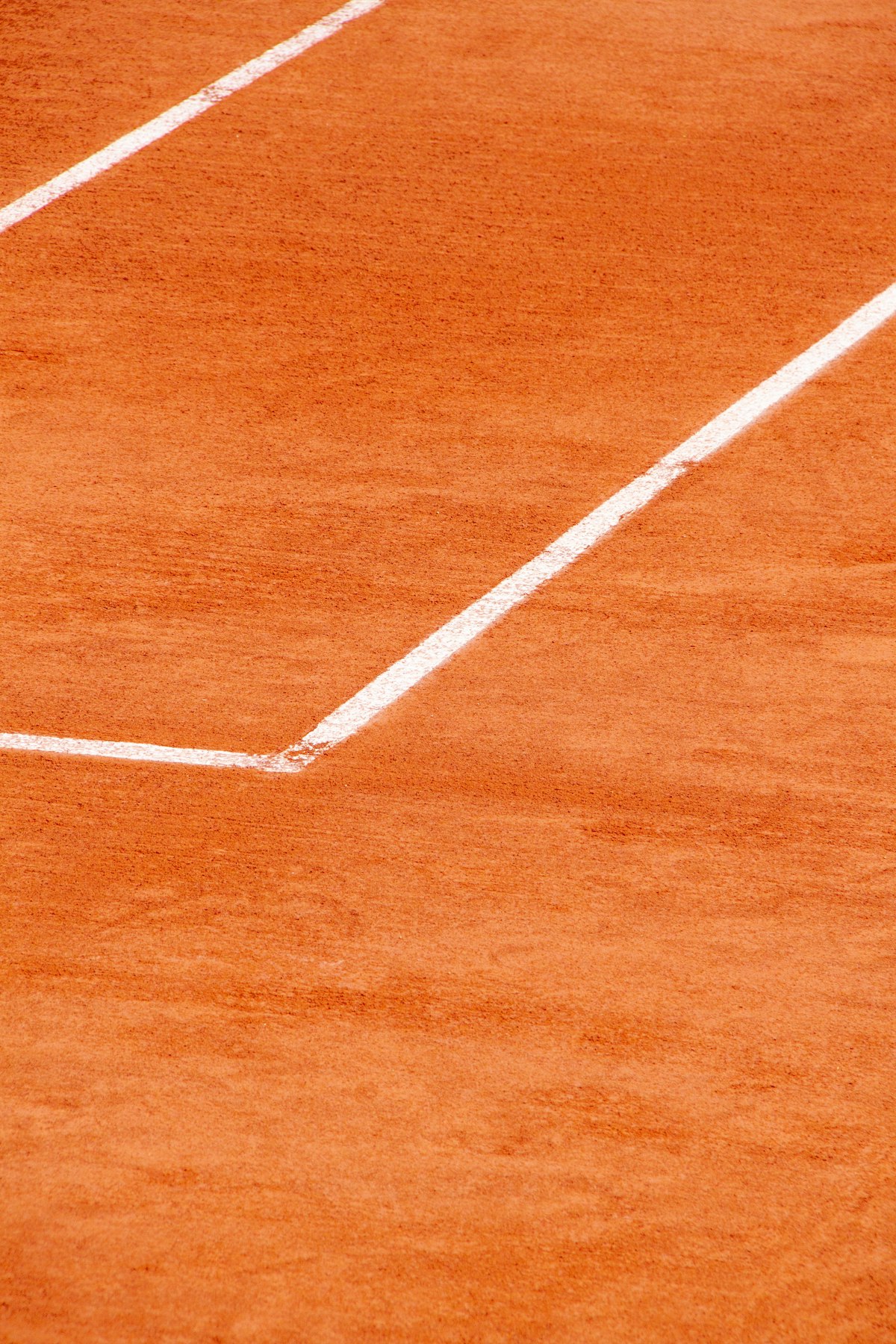 Photo by Aleksandr Galichkin
Clay courts are tennis at its most tactical. The French Open at Roland Garros is the only Grand Slam played on clay, and it consistently produces the longest, most grueling matches on tour.
Two types of clay
Red clay is made from crushed brick or shale. It's the surface at Roland Garros and across most of Europe and South America. When people say "clay court," they usually mean this.
Green clay (Har-Tru) is made from crushed metabasalt rock, first developed in Hagerstown, Maryland in 1932. It's primarily found in the eastern United States. It plays slightly faster than red clay but still significantly slower than hard courts.
Only about 15% of courts in the US are clay. In Europe and South America, it's a different story entirely. Clay is the dominant surface, and players grow up learning to slide before they learn to stop.
How they play
Clay is the slowest major surface. The ball grips the loose, gritty material on impact, losing speed and bouncing higher than on any other court. This has cascading effects on the entire game:
Rallies are longer. The slower pace gives both players more time to reach the ball. Winners are harder to hit because the surface absorbs pace. Points that would end in three shots on a hard court might last twelve on clay.
Topspin is amplified. The ball bites into the clay and kicks up dramatically. Players with heavy topspin, like Rafael Nadal who won 14 French Open titles, gain an enormous advantage because the surface exaggerates the spin they generate.
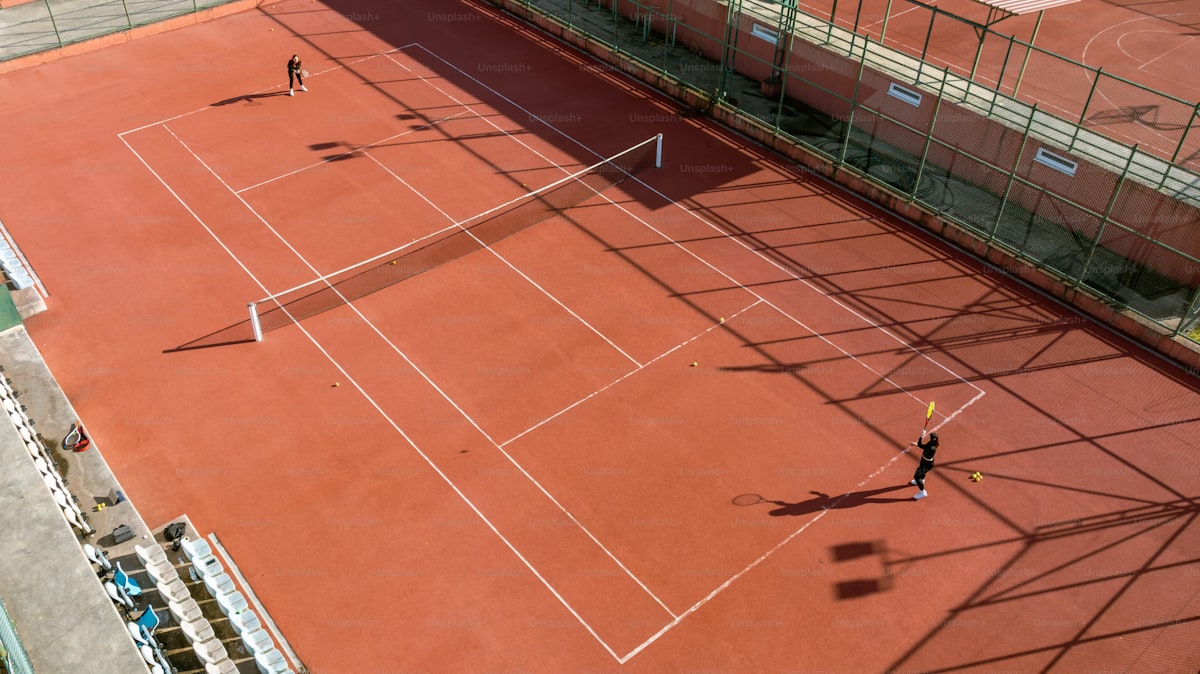
Movement is different. On clay, you slide into your shots instead of planting and stopping. This is a specific skill that takes time to develop. Watch any clay court specialist and you'll see them gliding across the surface, using the slide to set up their swing.
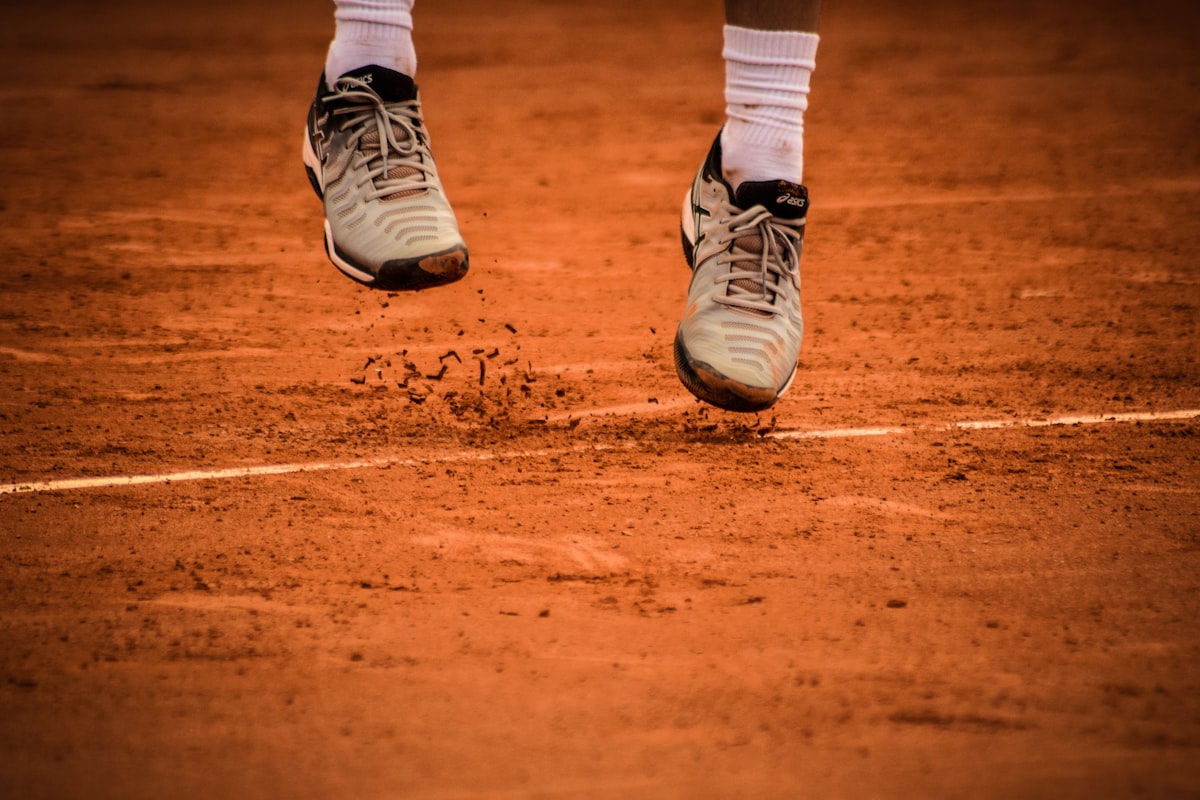 Photo by Gonzalo Facello
Big serves are neutralized. The surface slows everything down, giving the returner more time to react. Serve-and-volley tennis is far less effective on clay because the approach shot sits up for the opponent.
Maintenance: the catch
Clay courts are beautiful and forgiving on the body, but they demand constant attention. Daily brushing to redistribute the surface material. Regular watering to keep the clay from drying out and cracking. Rolling to maintain a smooth, level playing surface. Annual reconditioning. Lines need frequent repainting.
Full resurfacing runs $5,000 to $15,000 every 5 to 7 years. It's a labor of love, and it's the main reason you don't see more clay courts at public facilities.
The body benefit
Here's the flip side of all that maintenance: clay is the gentlest surface on your body. The loose material absorbs impact, and the ability to slide means your joints aren't absorbing the violent stopping forces that hard courts impose. If you have knee issues, a history of shin splints, or you're simply getting older and want to keep playing, clay is your friend.
Grass Courts: The Purist's Surface
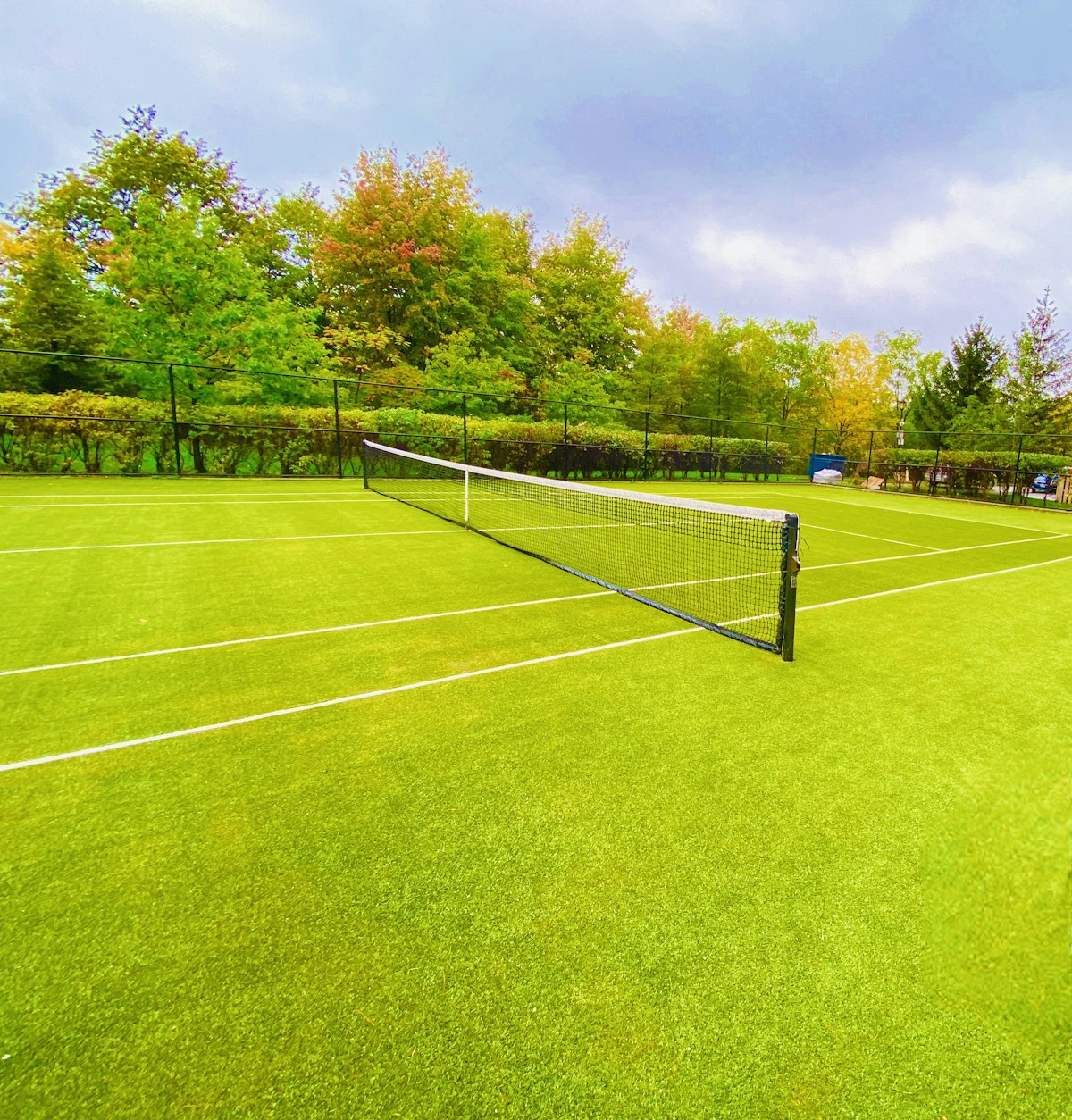 Photo via Unsplash
Tennis was born on grass. The modern game dates to 1873, and Wimbledon has been played on grass since 1877. All four Grand Slams were originally grass court events. Today, Wimbledon is the last one standing.
Why they're rare
Grass courts are extraordinarily expensive and difficult to maintain. Wimbledon uses 100% perennial ryegrass, cut to exactly 8mm height, tended by 15 or more full-time groundskeepers year-round. It takes 15 months to prepare a championship court, with seeding beginning each April.
A single grass court costs $10,000 to $25,000 per year to maintain, and that's assuming you have the specialized expertise to do it. They're unplayable in rain. They deteriorate visibly under foot traffic during a tournament. The grass season on the professional tour lasts only about three weeks.
For all these reasons, grass courts have largely disappeared outside of a handful of elite clubs and the Wimbledon complex. Only about 7 to 10% of professional tour events are played on grass.
How they play
Grass is the fastest major surface with the lowest, most unpredictable bounce. The ball skids off the blades rather than gripping them, staying low and moving through the court quickly. This historically made grass the ultimate surface for serve-and-volley players. Hit a big serve, rush the net, and put away the volley before the returner can set up.
The unpredictability is real. Grass courts aren't perfectly uniform. Worn patches, slight variations in grass density, and moisture levels all affect how the ball comes off the surface. You have to stay lower, react faster, and accept that sometimes the bounce will surprise you.
Modern racket technology and athletic conditioning have made baseline play more viable on grass than it used to be, but the surface still rewards players who are comfortable moving forward and finishing points at the net.
Injury profile
Grass is softer than hard courts, so there's less joint stress on impact. But the unique risks come from the surface itself: slipping on damp grass, rolling an ankle on an uneven patch, or losing footing during a rapid change of direction. The injury rate is moderate, sitting between clay (lowest) and hard courts (highest).
The Surface That Disappeared: Carpet
Worth a brief mention. Carpet courts were removable synthetic surfaces used primarily for indoor tournaments. They played extremely fast, even faster than grass, producing short rallies dominated by big servers.
The ATP discontinued carpet from its tour in 2009. The reasons: injury concerns from friction burns, boring spectator experience due to ultra-short rallies, and a push to standardize indoor events on hard courts. Today, no major professional events use carpet.
How Surface Affects Your Playing Style
Here's a quick reference for how the three main surfaces compare:
| Factor | Hard Court | Clay Court | Grass Court |
|---|---|---|---|
| Ball speed after bounce | Medium-fast | Slow | Fast |
| Bounce height | Medium-high | High | Low |
| Spin effect | Moderate | Amplified | Reduced |
| Rally length | Medium | Long | Short |
| Movement | Stop and start | Slide | Quick, low steps |
| Favored style | All-court | Baseline/topspin | Serve-and-volley |
| Injury risk | Highest | Lowest | Moderate |
| Maintenance | Low | High | Very high |
The Grand Slams reflect this diversity perfectly. The Australian Open and US Open on hard courts tend to reward the most complete players. The French Open on clay is a war of attrition that favors grinders with heavy topspin. Wimbledon on grass is the fastest of the four and rewards aggressive, net-rushing tennis.
Which Surface Is Best for Beginners?
Hard courts are the practical answer. They're widely available at public parks, the bounce is consistent and predictable, and the surface requires almost no specialized footwork technique. You can focus on learning to hit the ball without the court adding extra variables.
Clay courts are the body-friendly answer. If you're starting tennis later in life or have joint concerns, the softer surface and ability to slide will save you a lot of wear and tear. The slower pace also gives you more time to react, which is genuinely helpful when you're still developing your timing.
Either way, don't overthink it. The best surface is the one at the court you'll actually show up to play on.
Finding Courts Near You
Different surfaces suit different players, but the first step is just getting out there. Whether you prefer the consistency of hard courts, the strategy of clay, or you're lucky enough to have access to grass, finding a court shouldn't be the hard part.
Browse popular tennis cities to start playing:
New York · Los Angeles · Chicago · San Diego · Washington DC · San Francisco · Atlanta · Miami
Or browse all tennis courts by state.
Sources
- ITF Court Pace Classification - Official surface rating system
- Wimbledon Grass Courts - How Wimbledon maintains its courts
- Aspetar Sports Medicine Journal - Injury Trends Across Surfaces - Medical research on surface-related injuries
- Wikipedia - Hard Court, Clay Court, Grass Court, Carpet Court - General reference
- USTA Facility Report - US tennis court statistics
Written by the team at Tennis Count, a free court discovery platform built by tennis and pickleball players for tennis and pickleball players. We write from firsthand playing experience to help you find the best courts and make the most of your time on them.