Two sports. One question. Which one should you actually be playing?
Over the past decade, pickleball has gone from a backyard novelty to the fastest-growing sport in the United States. The Sports & Fitness Industry Association (SFIA) reported 13.6 million pickleball players in the U.S. in 2023, a number that had more than tripled in three years. Meanwhile, the USTA still counts roughly 23.6 million tennis players across the country — a sport that has quietly posted its own participation growth since 2020.
The result is that courts across the country are hosting both sports simultaneously, and millions of people are facing the same decision: do I learn tennis, do I try pickleball, or do I play both?
This guide compares them honestly. Not to crown a winner — both sports are worth playing — but to help you figure out which one fits where you are right now.
At a Glance: The Key Differences
| Category | Tennis | Pickleball |
|---|---|---|
| Court size | 78 ft × 36 ft (doubles) | 44 ft × 20 ft |
| Net height (center) | 3 ft | 34 inches |
| Equipment cost (starter) | $100–$250 | $40–$120 |
| Learning curve | Steep | Gentle |
| Avg. recreational game | 60–90 minutes | 20–35 minutes |
| Running distance per match | 1–3 miles | 0.25–0.5 miles |
| Joint impact | Moderate to high | Low to moderate |
| Social dynamic | Often singles-focused | Predominantly doubles |
Court and Equipment
The Court
A standard tennis court measures 78 feet long and 27 feet wide for singles, 36 feet wide for doubles. You are covering a lot of ground. The net sits at 36 inches on the posts and 34 inches at the center.
A pickleball court is 44 feet long and 20 feet wide — roughly the size of a doubles badminton court and less than a third of the total area of a tennis court. The net sits slightly lower, at 36 inches on the posts and 34 inches at the center, nearly the same as tennis.
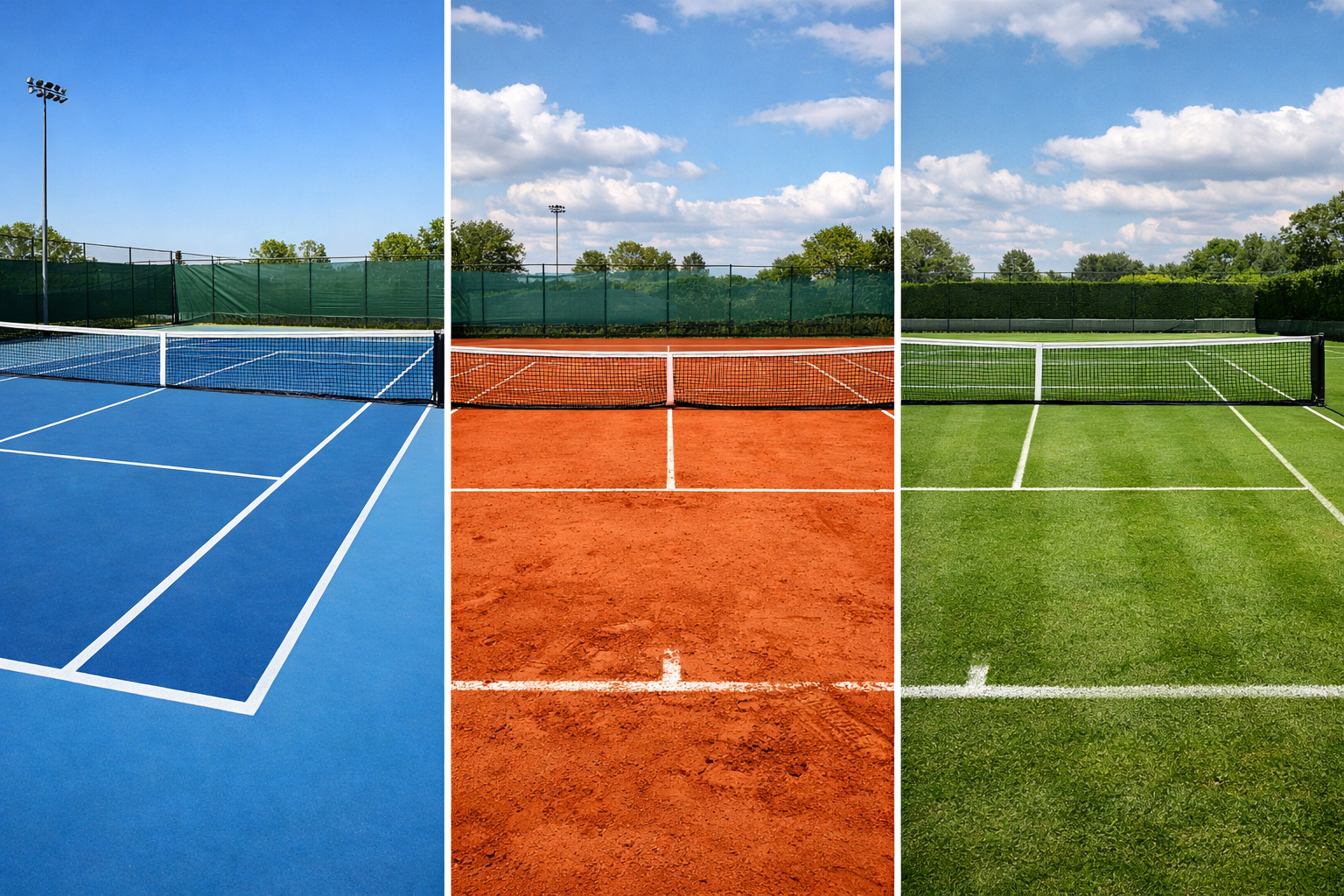
Because pickleball courts are smaller, they can be created by painting lines on existing tennis courts. Many facilities have converted courts or added pickleball lines on top of existing tennis surfaces, which is a major reason pickleball has been able to expand so quickly without requiring significant new infrastructure. The surface underneath those lines matters too — hard courts play differently than clay, and that affects both sports.
Equipment
Tennis requires a racket, tennis balls, and appropriate footwear. A beginner's racket from a reputable brand (Wilson, Head, Babolat) runs between $60 and $150. A can of three balls costs around $4–$6. Court shoes add another $60–$100 if you don't already have a pair with proper lateral support.
Pickleball equipment is simpler and cheaper. A solid beginner paddle costs $40–$80. Pickleball balls — hard plastic with holes, either indoor or outdoor versions — cost roughly $2–$4 per ball and a pack of six runs about $12–$18. Because the court is smaller and the game slower, standard athletic footwear often works for beginners, though dedicated pickleball shoes are available.
Total startup cost is meaningfully lower for pickleball, and the lighter paddle is easier to swing without strain.
Rules Overview
Tennis Scoring
Tennis uses a traditional scoring system: 0 (love), 15, 30, 40, and game. Win four points to win a game, six games to win a set, and most recreational matches are played as best-of-three sets. Deuce (40–40) extends the game until one player wins two consecutive points.
Serving alternates between players each game. You get two attempts on each serve (first and second serve), with the ball needing to land in the diagonal service box.
Pickleball Scoring
Pickleball scoring is simpler on paper but takes some adjustment. Games are typically played to 11 points, win by 2. In traditional scoring, only the serving side can score — if the receiving side wins the rally, they gain the serve. In doubles, both players on a team serve before the serve passes to the opponents (with one exception at the start of each game).
Scores in doubles are called as three numbers: server's score, receiver's score, server number (1 or 2). "6-4-2" means the serving team has 6 points, receiving team has 4, and it's the second server.
Rally scoring — where either side can score on any rally — has become common in recreational play and some amateur tournaments, simplifying things considerably.
The Kitchen and the NVZ
Pickleball's most distinctive rule involves the non-volley zone, universally called "the kitchen." This is the 7-foot area on each side of the net. You cannot volley the ball — hit it out of the air — while standing in the kitchen or with either foot on the kitchen line. You can step into the kitchen to play a ball that has bounced, but you must exit before volleying again.
This rule fundamentally changes the game's strategy. It prevents players from camping at the net and spiking everything, which would make the sport entirely about power. Instead, dinking — trading soft, low shots into the kitchen — becomes a central skill, and patience at the net is often more valuable than aggression.
Tennis has no equivalent zone. Net play in tennis rewards quick reflexes and powerful volleys, and skilled net players use their position to end points quickly.
Tip: If you're coming from tennis, the kitchen rule is the biggest mental adjustment. Your instinct to poach at the net will get you called for kitchen violations until the habit resets.
Fitness and Physical Demands
Running and Cardio
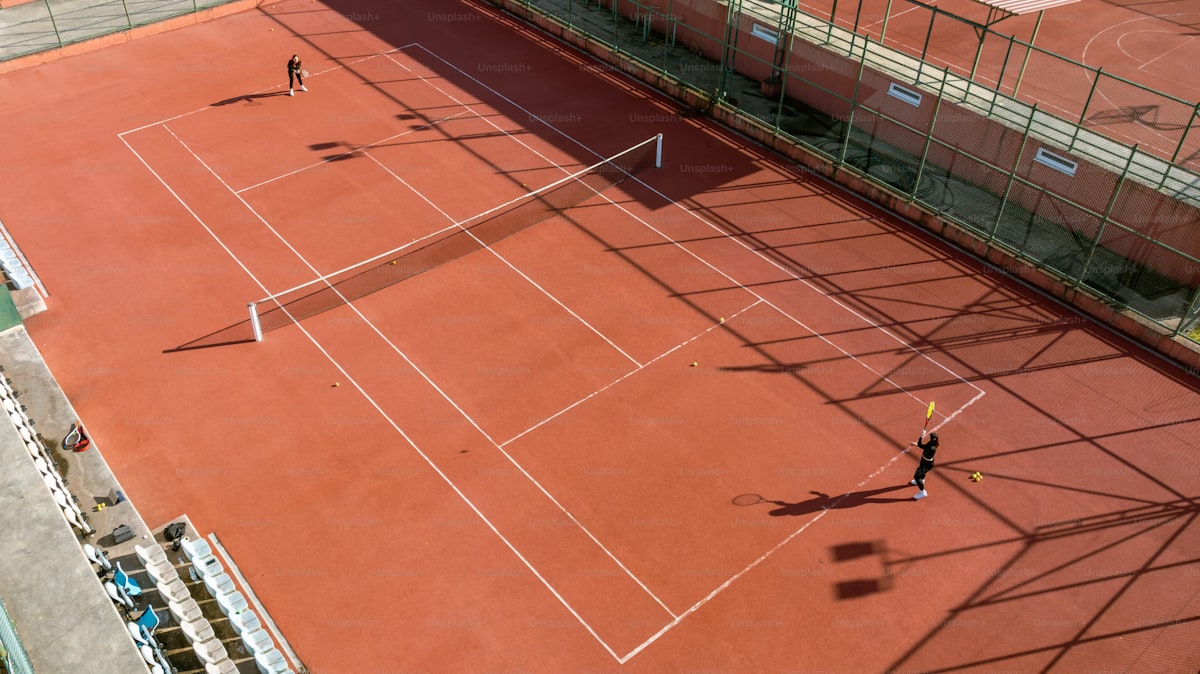
Tennis is a high-intensity interval sport. Recreational players typically cover 1 to 3 miles in a singles match, with repeated short sprints between points. A 60-minute singles match burns roughly 400–600 calories for an average adult.
Pickleball involves far less running. The court is smaller, the pace is typically slower, and much of the game is played from the baseline or mid-court. Recreational players often cover a quarter to half a mile per game. That does not mean the sport is without aerobic benefit, but the caloric demand is lower — closer to 250–400 calories per hour.
Joint Impact
Tennis places significant stress on the knees, hips, shoulders, and elbows. Lateral movement on a hard court, combined with the torque of a full swing, is demanding on the body. Tennis elbow (lateral epicondylitis) is one of the most common overuse injuries in the sport. The larger racket swing also requires greater shoulder mobility.
Pickleball's smaller court and lighter paddle reduce peak joint stress. The shorter swing and smaller movement patterns are easier on hips and knees. This is one reason the sport has become particularly popular with players over 50 — the physical accessibility is genuinely different, not just marketing.
That said, pickleball is not injury-free. Achilles tendon injuries and ankle sprains are reported frequently, partly because players who haven't been active in years start playing with high frequency. The perception that it's "low impact" sometimes leads people to skip warm-ups.
Intensity and Strategy
Tennis rewards a combination of power, speed, endurance, and technical precision. The gap between a beginner and an intermediate player is enormous and takes considerable time to close.
Pickleball has a flatter learning curve. A complete beginner can have a genuinely enjoyable game within a few sessions. This is largely because the court is forgiving in size, the slower ball gives more reaction time, and the dinking game rewards consistency over athleticism.
At the competitive level, both sports reward strategy, placement, and pattern recognition. Elite pickleball is far more nuanced than it appears to a casual observer.
Cost to Get Started
Court Access
Both sports share public courts (or converted public courts) in many cities, which means free or low-cost play is available if you find availability. Dedicated indoor pickleball facilities have emerged in many cities, typically charging $15–$25 per session or offering monthly memberships.
Tennis courts at public parks are generally free. Private clubs charge anywhere from $50 to several hundred dollars per month. For tips on how to find tennis courts near you — including free public options — there are a few strategies that make the search faster.
Equipment Summary
| Item | Tennis (beginner) | Pickleball (beginner) |
|---|---|---|
| Racket / Paddle | $60–$150 | $40–$80 |
| Balls (starter supply) | $10–$20 | $12–$18 |
| Court shoes | $60–$100 | $0–$70 |
| Total | $130–$270 | $52–$168 |
Tennis balls also deaden faster than pickleballs, adding to the ongoing cost for frequent players.
Social and Community Aspects
This is where the two sports diverge most visibly.
Pickleball is built around doubles. Most recreational and competitive play involves four players on a court at once. Open play sessions — where strangers show up, form groups, and rotate in — are the norm at facilities across the country. The smaller court puts players physically closer together, encouraging conversation and a naturally social atmosphere. New players are routinely welcomed into games with experienced players, because the skill gap is manageable and the format is inclusive.
Tennis is more often a singles pursuit. While doubles is popular and many clubs run leagues and social events, the default recreational format is two players playing out a match. Making tennis friends often requires finding a club, joining a league, or using a platform that matches players by rating. The social infrastructure is there, but it takes more deliberate effort to access.
This distinction matters. If you want to walk into a new facility and immediately be part of a rotating group of people, pickleball has a structural advantage. If you prefer focused one-on-one competition with a reliable partner, tennis may suit you better. Both sports also come with their own etiquette norms — tennis in particular has a long set of written and unwritten rules that take time to absorb.
Age and Accessibility
Pickleball's growth has been most pronounced among adults over 50, and the reasons are straightforward: lower physical demand, simpler equipment, shorter games, and a social format that doesn't require finding a dedicated doubles partner. According to SFIA data, players 65 and older represent the fastest-growing pickleball demographic.
That does not mean pickleball is only for older adults — competitive play skews younger — but the sport's accessibility to players who haven't been active in years is a genuine differentiator.
Tennis has no strict age barrier, but the physical demand and technical complexity mean it takes longer to reach a point where the game feels rewarding. Players who start tennis as adults often spend their first year feeling like they're working to get fit enough to actually play. If that's your situation, starting with a structured beginner approach shortens that ramp-up considerably.
Children and teenagers tend to learn tennis skills effectively through structured lessons. Youth pickleball programs exist but are less common.
Which Should You Choose?
There is no universal right answer, but there are clear signals.
Choose pickleball if:
- You want to be competitive and social quickly, without years of technical development
- You have existing joint issues or are returning from a long break from exercise
- You want shorter, more frequent games that fit into a busy schedule
- You value an immediately welcoming social environment at open play
- Budget is a meaningful constraint at startup
Choose tennis if:
- You want a sport with a deep technical ceiling that rewards years of development
- You enjoy the individual challenge of singles competition
- You're comfortable with a longer ramp-up before games feel fluent
- You want a more intense cardio workout per session
- You prefer more formal competitive structures (USTA leagues, tournaments)
Play both if:
- You want variety in your weekly activity
- You already play one and are curious about the other
- You have access to facilities that offer both
Many competitive tennis players find pickleball a useful complement — the hand-eye coordination and net sense transfer in both directions. The reverse is also true: pickleball players who want more cardio and longer rallies often find tennis gives them a new challenge.
The good news is that the infrastructure for both sports has never been more accessible. Public parks, recreation centers, and private clubs across the country now offer courts for both.
Find Courts in Your City
Whichever sport you choose, here are some popular places to start playing:
Tennis: New York City, Los Angeles, Chicago, San Diego, Washington DC, San Francisco
Pickleball: Phoenix, Austin, Tampa, Denver, Nashville, Seattle
Don't see your city? Browse all tennis courts or pickleball courts by state.
Whether you're looking for a tennis court or a pickleball court, Tennis Count helps you find courts near you — free, fast, and no sign-up required. Search by city, sport, and surface type to find your next game.
Sources
- SFIA 2023 Topline Participation Report — Pickleball participation figures (13.6 million U.S. players, 2023) and demographic breakdowns
- USTA Participation Data — 23.6 million U.S. tennis players (2022 survey)
- USA Pickleball Official Rules — Non-volley zone, scoring, and serving rules
- ITF Rules of Tennis — Official tennis rules including scoring and court dimensions
- Pickleball Court Dimensions — USA Pickleball — Authoritative court size and net height specifications
- Tennis Court Dimensions — ITF — Official court size and net height specifications
- Calories Burned Playing Tennis — Harvard Health Publishing — Caloric expenditure estimates by activity
- Pickleball Injuries Are Rising — American Academy of Orthopaedic Surgeons — Achilles and ankle injury patterns in pickleball players
- Tennis Elbow (Lateral Epicondylitis) — Mayo Clinic — Overview of the most common tennis overuse injury
Written by the team at Tennis Count, a free court discovery platform built by tennis and pickleball players for tennis and pickleball players. We write from firsthand playing experience to help you find the best courts and make the most of your time on them.