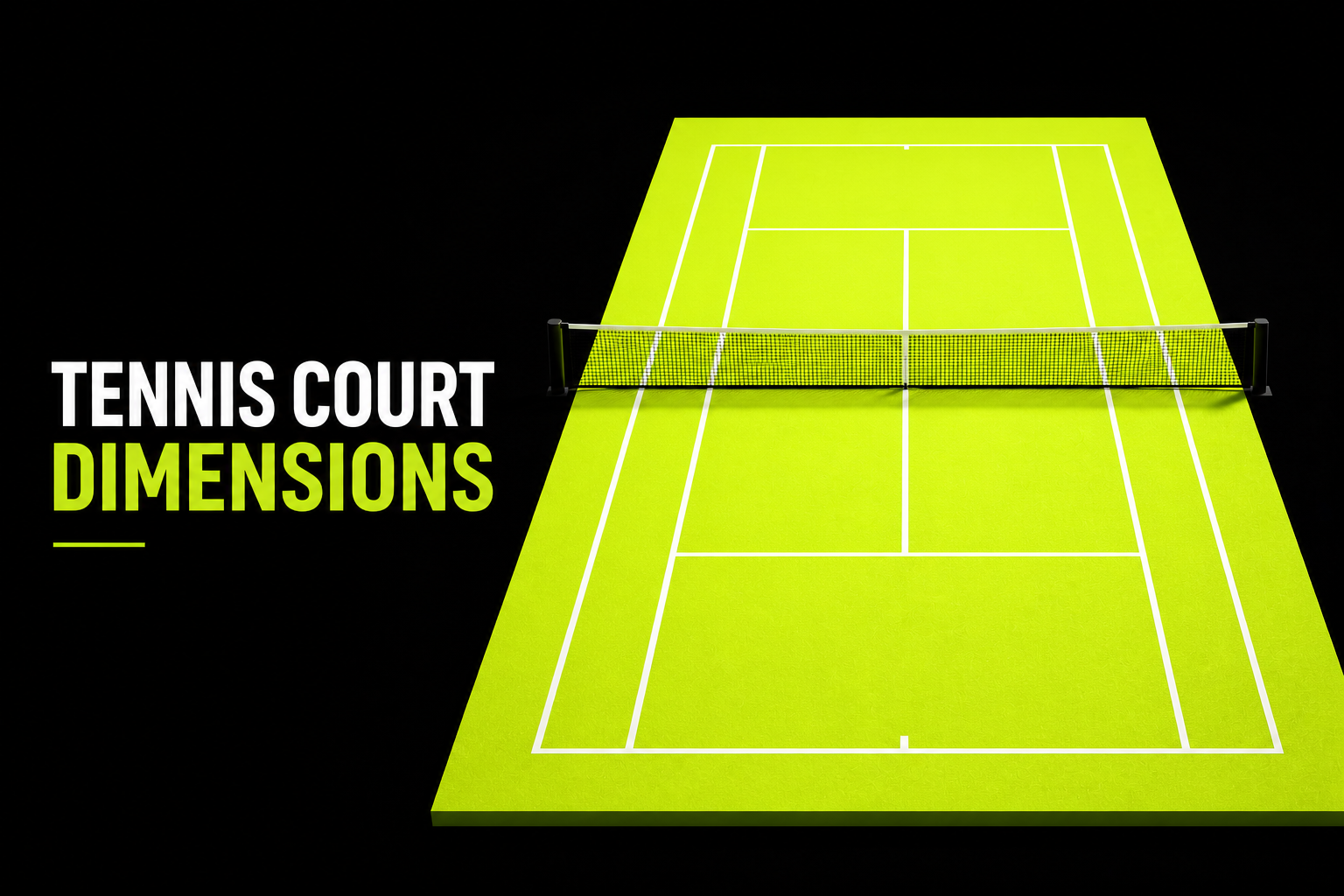
 Photo by Sergio Arteaga
Quick answer: Per ITF Rule 24(g), players cannot touch the net, net posts, net cord, strap, or band with their body, racket, clothing, or anything they are carrying while the ball is in play. Players also cannot step on or touch the opponent's court before the ball bounces twice. Either is an automatic loss of the point.
Tennis has always been a sport that carries itself differently. Born in the courts of French nobility as jeu de paume, refined under the manicured lawns of Wimbledon, and codified by the International Tennis Federation over more than a century, the game comes with a set of expectations that go well beyond knowing how to keep score.
Some of these expectations are actual rules. Violate them and you lose the point. Others are unwritten, the kind of thing nobody teaches you, but everyone notices when you get wrong.
This is the complete guide to both.
The Rules That Will Actually Cost You Points
Let's start with the stuff that's in the rulebook. These aren't suggestions.
Don't Touch the Net. Period.
ITF Rule 24(g) is blunt about this: if any part of your body, your racket, your clothing, or anything you're carrying touches the net, net posts, net cord, strap, or band while the ball is in play, you lose the point. Immediately. No warning, no second chance.
This includes your follow-through. You can finish your swing on the opponent's side of the net, and that's legal, as long as the ball was struck on your side first. But if your momentum carries you into the net? Point over.
It also applies to situations players don't always think about. A hat blows off and grazes the net cord. Your shirt brushes the tape as you stretch for a volley. Your racket slips out of your hand and slides into the net post. All of these are automatic loss of point.
The rule exists for a reason. The net is neutral territory. Nobody gets to interfere with it while the ball is live.
Keep Your Side of the Court Clear
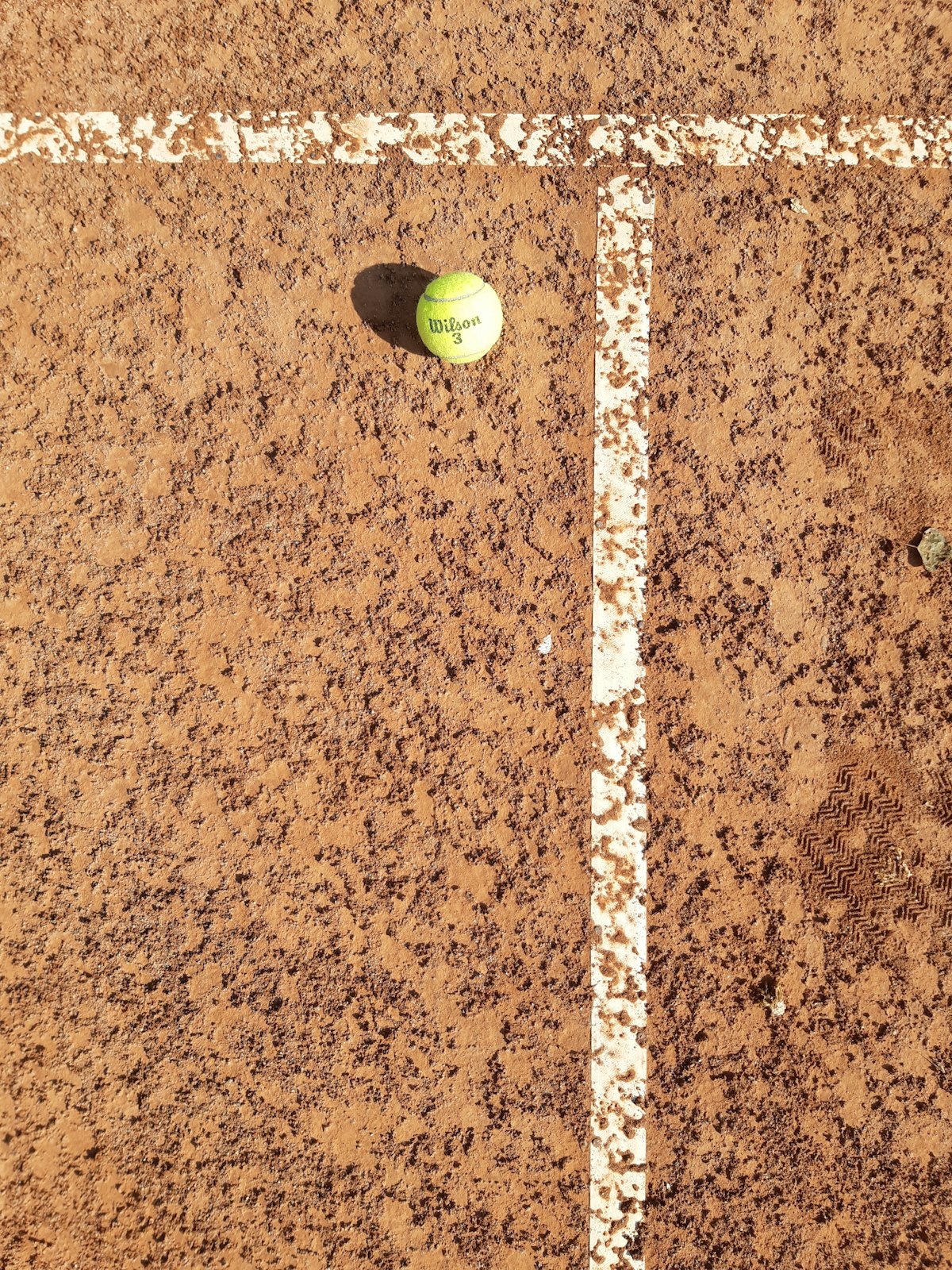 Photo by Federico Panaiotti
Here's one that catches a lot of recreational players off guard. If there is a loose ball sitting on your side of the court and the ball in play strikes it, your opponent wins the point. It doesn't matter how the loose ball got there. It doesn't matter if it was tucked against the back fence or sitting near the net post. If the live ball hits it, that's your problem.
This is why experienced players are meticulous about keeping stray balls in their pockets, in a ball clip, or pushed tightly against the fence behind the center mark. Balls just lying around on the court surface are not just a tripping hazard. They can literally cost you a point.
Get in the habit of clearing your side before every point. It takes two seconds and it could save you from one of the most frustrating ways to lose a game.
Hindrance: The Rule Nobody Fully Understands
ITF Rule 26 covers hindrance, and it draws a critical line between two categories.
Deliberate hindrance means you did something intentional that interfered with your opponent's ability to play the ball. The penalty is immediate loss of point. No replay, no discussion.
Unintentional hindrance means something happened outside anyone's control. A ball rolls in from an adjacent court. A bird flies through the point. Your hat blows off mid-rally. In these cases, the point is replayed as a let.
Here's where it gets interesting. Shouting during a point can be ruled a deliberate hindrance. At the 2026 Indian Wells, Jack Draper raised his arms at a disputed line call while the ball was still in play against Daniil Medvedev. After video review, the umpire ruled it a hindrance and awarded the point to Medvedev.
Even an apology can cost you. Medvedev himself was penalized in a match against Alexander Bublik for saying "sorry" mid-rally. The umpire judged it a hindrance. The ball was still live. Doesn't matter that the intent was polite.
The takeaway: while the ball is in play, say nothing. No "out!" calls on your opponent's side. No "come on!" until the point is actually over. No exclamations of any kind. Celebrate after the ball bounces twice.
Grunting, Shrieking, and Where the Line Is
This is the most debated area in modern tennis, and the rules leave room for interpretation.
The WTA rulebook states that "any continual distraction of regular play, such as grunting, shall be dealt with in accordance with the Hindrance Rule." In theory, a player can be docked a point for excessive noise. In practice, consistent grunters, players who vocalize on every shot as part of their natural stroke production, are almost never penalized.
The distinction officials look for is between habitual and tactical noise. Maria Sharapova registered 105 decibels on a sound meter in 2009, roughly equivalent to a chainsaw. Victoria Azarenka's rising-then-falling shriek drew complaints for years. Martina Navratilova publicly accused both of deliberate distraction.
Research backs up the concern. Studies have shown that extraneous sound during a tennis point makes observers' responses both slower and less accurate, suggesting that grunting can confer a genuine competitive advantage whether or not that's the intent.
The practical rule for recreational players: if you grunt naturally, that's fine. If you're suddenly louder on big points, or making noise specifically when your opponent is about to strike the ball, you're in hindrance territory. And yelling "out!" or anything else while the ball is still in play? That's not grunting. That's a deliberate hindrance and you'll lose the point.
The 25-Second Clock
Between points, you have 25 seconds. The shot clock, now standard on the ATP, WTA, and Grand Slam tours, starts when the umpire calls the score.
The penalty escalation: first violation is a warning, second and subsequent violations result in a fault (if you're serving) or a point penalty (if you're receiving).
On public courts, nobody's running a shot clock. But the principle applies. Don't take two minutes between points to towel off, check your phone, and retie both shoes. Your opponent's time matters too.
The Unwritten Rules
These won't cost you points on the scoreboard. They'll cost you something more important: your reputation on the court.
Walking Behind Courts
Never cross behind an active court during a point. This is the single most common etiquette violation at public facilities, and it's a safety issue as much as a courtesy one. A player running backward for an overhead can collide with someone walking behind the baseline.
Wait at the gate. Watch for a break in play. Walk quickly and quietly. If you're crossing behind multiple courts, pause between each one.
Line Calls and the Honor System
On courts without officials, which is every public court and most club matches, you call the lines on your own side. The USTA's "The Code" lays out the standard clearly: when in doubt, the ball is in. Give your opponent the benefit of the doubt.
Make calls immediately and loudly. A delayed "out!" call, the kind that comes a full second after the ball lands, right after you realize you can't reach the next shot, is the most corrosive thing you can do to a match. Even if the ball was actually out, the delay poisons the atmosphere.
If a call is genuinely close and you're not sure, offer to replay the point. It costs you nothing and signals that you care more about getting it right than winning a single rally.
And if your opponent makes a call you disagree with? Let it go. One bad call doesn't justify retaliating with your own bad calls. That's how recreational matches turn ugly.
Returning Stray Balls
Balls wander. It's inevitable on multi-court facilities. How you handle it is a small but reliable indicator of your court awareness.
If a ball rolls onto your court from an adjacent match, pick it up and hold it. Wait for a natural break in their play. Then roll or toss it back gently, to the server ideally, so they can pocket it for their next service game. Don't rifle it back. Don't interrupt their point to return it.
If your ball escapes onto someone else's court, call out "ball!" immediately so they know there's a loose ball in their playing area. Wait for them to send it back. Don't walk onto their court to retrieve it yourself.
The Warm-Up Isn't Practice
The standard warm-up is five minutes. Use it cooperatively: rally ground strokes at moderate pace for three to four minutes, trade a few volleys, practice overheads briefly, then each player takes a set of practice serves.
Hit at around 70 to 80 percent power. Aim toward your opponent, not away from them. The warm-up is about finding timing and feel, not about intimidating the person across the net. Don't hit winners. Don't return your opponent's practice serves unless they specifically ask you to.
Scoring Announcements
The server calls the score before every point, server's score first. This is actually codified in USTA's "The Code," not just a courtesy. It prevents disputes, establishes the pace of the match, and confirms both players are ready.
Call it loud enough for your opponent to hear from the baseline. If you lose track, stop and discuss it calmly. Don't serve and argue afterward.
Court Sharing and Time Limits
Public courts are shared resources. Most parks post time limits, typically 60 to 90 minutes, and they exist for a reason. If people are waiting, honor the limit. Don't pretend you didn't see them standing by the gate.
Don't reserve courts by leaving a bag on the bench. If you're not physically present and ready to play, the court is available.
And keep your phone on silent. A ringtone during someone's service motion is universally unwelcome. As for music: if you must, keep it low enough that neighboring courts can't hear it. If someone asks you to turn it down, do it without negotiation.
The Net Handshake
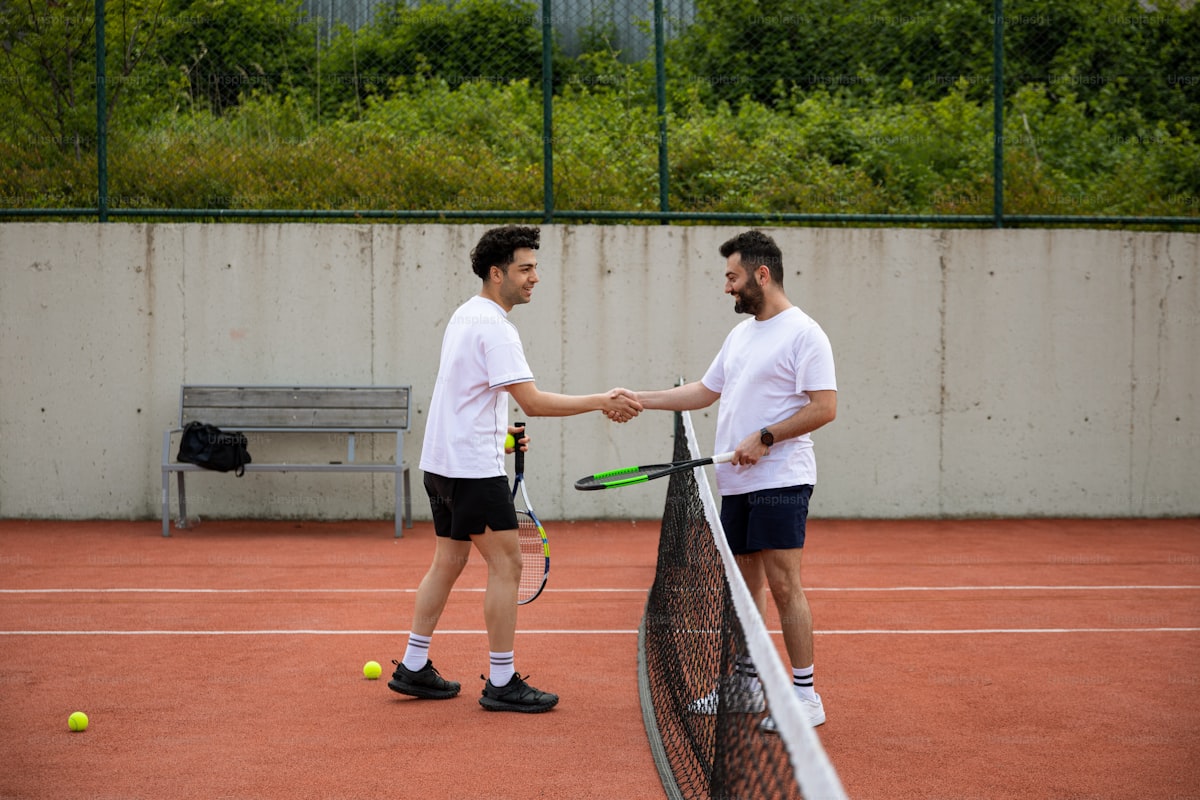 Photo by Mesut Cicen
The post-match handshake, or racket tap, is one of tennis's most enduring traditions. Both players meet at the net. The loser typically initiates. You make eye contact, shake hands, and acknowledge the match. "Good match" or "well played" is enough.
This isn't a formality you can skip when you're frustrated. Refusing the handshake, giving a limp hand, or rushing through it is considered one of the worst breaches of tennis sportsmanship.
The standard for how to handle it was set most memorably at the 2009 Australian Open. After Nadal defeated Federer in an agonizing five-set final, Federer broke down during the trophy ceremony. Nadal walked over, put his arm around him, and quietly consoled him. "I'm sorry for today," he told Federer. "I really know how you feel. But remember, you are one of the best players of the history."
On the other end of the spectrum: excuses. "I wasn't playing my best," "my shoulder's been bothering me," "I didn't sleep well." Every experienced player has heard these, and every one of them diminishes your opponent's effort. If they won, say so. Save the explanation for your own notes app.
Doubles Etiquette
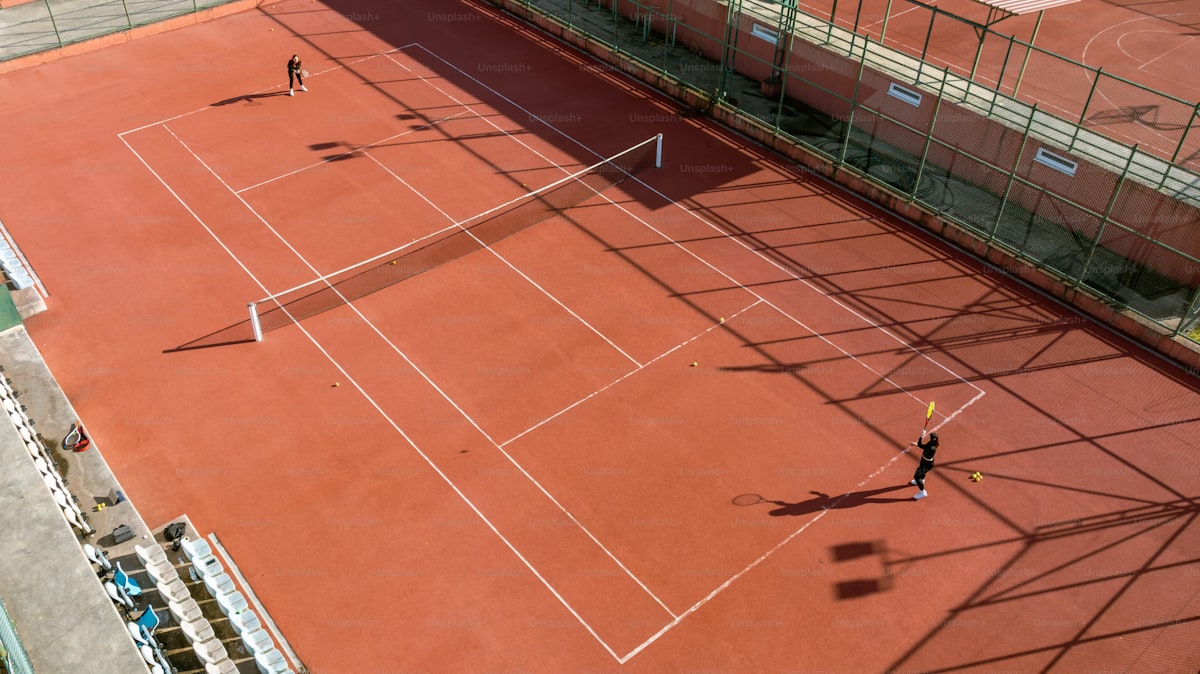 Photo by Ahmet Kurt
Doubles has its own layer of social dynamics.
Communicate with your partner, not at them. Encouragement between points keeps the team cohesive. Visible frustration with your partner's mistakes, the sighing, the eye-rolling, the unsolicited technical advice, is poison. Nobody plays better when they feel judged by the person standing eight feet away.
Call "mine" or "yours" on every ball down the middle. Collisions between doubles partners are more common than people think, and they're entirely preventable.
Use hand signals. The net player signals the server before each point: a closed fist means "I'm staying," an open hand means "I'm poaching." This eliminates guesswork and makes both players feel like they're operating as a unit.
In social doubles, keep perspective. Targeting the weaker player on every single point is strategically sound and socially tone-deaf. Read the room. If you're playing a friendly weekend match, the goal is for everyone to have a good time, not to expose someone's backhand for two straight sets.
Taking Care of the Court
You don't own the court. But while you're on it, you're responsible for it.
Pick up everything you brought. Ball cans, water bottles, grip tape, snack wrappers. On clay courts, dragging the surface after your session isn't optional. It takes two minutes, and the players after you will notice whether you did it. On hard courts after rain, use the squeegee if one's available.
If you see damage, a torn net, a cracked surface, a sagging net strap, report it to the facility. Courts don't maintain themselves, and the sooner an issue is flagged, the sooner it gets fixed.
Why Any of This Matters
Tennis is one of the few sports where you can play a competitive match against a complete stranger with no referee, no coach, and no one watching. The entire system runs on trust. Trust that your opponent will call the lines fairly. Trust that the person on the next court won't walk behind you during a point. Trust that when the match is over, you'll both meet at the net and acknowledge what just happened.
That trust is built on etiquette. The small, consistent decisions that signal you respect the game and the people who play it.
The best players at every level aren't just the ones with the best forehands. They're the ones people want to play with again.
Find Tennis Courts in Your City
Ready to get out there? Browse popular tennis cities:
New York · Los Angeles · Chicago · San Diego · Washington DC · San Francisco · Houston · Miami
Or browse all tennis courts by state.
Sources
- ITF Rules of Tennis (2026 PDF) - Official rules including Rule 24(g) on net contact and Rule 26 on hindrance
- USTA "The Code" - Players' Guide to Fair Play (PDF) - The honor-system guidelines for line calls, scoring, and conduct on courts without officials
- ITF Rules and Regulations - Full governance documents from the International Tennis Federation
- What Does Hindrance Mean in Tennis? - Sportsver - Detailed breakdown of ITF Rule 26 with examples
- Tennis Hindrance Call Explained: Draper vs. Medvedev - Yahoo Sports - The 2026 Indian Wells incident
- Grunting in Tennis - Wikipedia - History and controversy around noise in professional tennis
- How the Sharapova/Azarenka Grunting Debate Unfolded - CNN - Coverage of the 105-decibel controversy
- Essential Tennis Etiquette - Tennis Companion - Comprehensive guide to unwritten court norms
- Federer-Nadal Rivalry - Wikipedia - Context on the 2009 Australian Open final and sportsmanship moment
- Why Wimbledon Players Wear White - Britannica - Historical origins of tennis dress code and etiquette traditions
Written by the team at Tennis Count, a free court discovery platform built by tennis and pickleball players for tennis and pickleball players. We write from firsthand playing experience to help you find the best courts and make the most of your time on them.